
Why Your Website Isn’t Bringing In Clients And How to Fix It
I’ve been in business for years and saw how other founders/business owners always seem to undervalue the role websites can possibly play in their businesses. Afraid to spend, they hire a designer without proper web dev experience, sweat over the colors, obsess over fonts, and finally hit publish — relieved that the hard part is over.
Then they wait.
A few weeks pass. Maybe a few months. The site looks clean, the logo is sharp, and the about page finally captures the brand voice. But the inquiries? The leads? Inconsistent at best.
And somewhere in the back of their mind, a quiet frustration starts to build: why isn’t this working?
The painful truth is… a good-looking website and a website that generates revenue are not the same thing. In reality, they’re often completely different animals. One is a design project. The other is a fully-functioning, revenue-generating sales system.
If your website isn’t consistently bringing in leads, bookings, or sales, it’s not a design problem. It’s a strategy problem.
In this article, we break down the exact framework we use when building websites that actually move the needle for businesses. We call it the CRAFT Framework, and by the time you finish reading, you’ll know precisely which part of the framework is failing and what to do about it.
The CRAFT Framework
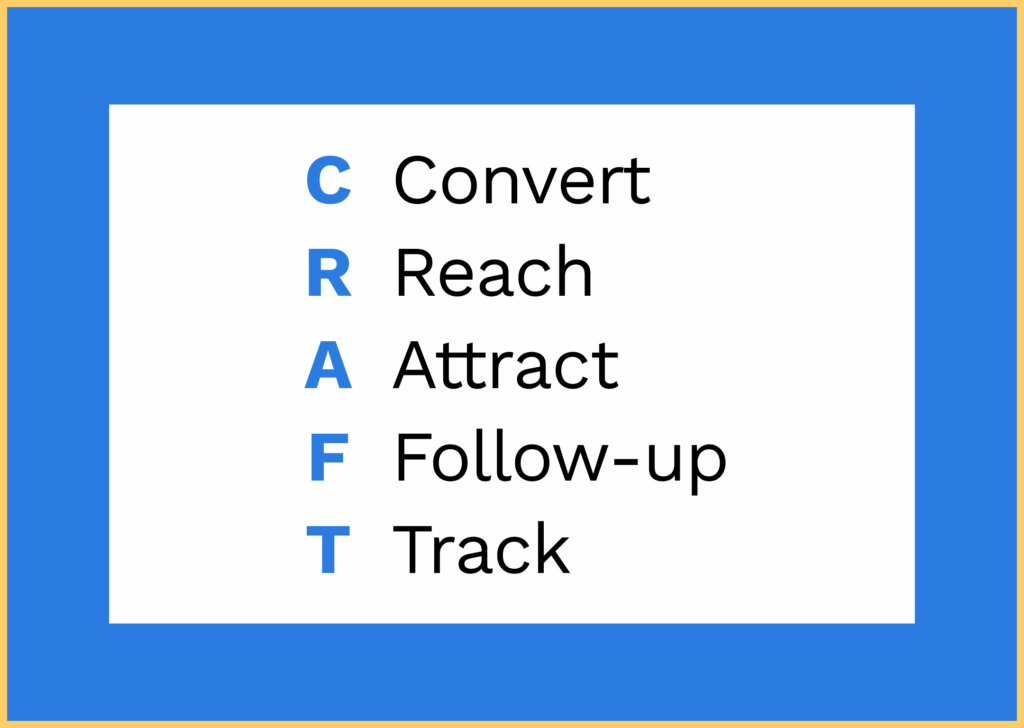
Your website’s like a house. It may have a beautiful facade, but if any one of its structural pillars is weak or missing, the whole thing quickly becomes unstable. The CRAFT Framework is to websites what structural pillars are to buildings. Remove one, and the revenue potential of your entire website collapses.
So, just what is CRAFT?
- Convert (Funnel)
- Reach (SEO)
- Attract (Content)
- Follow-up (CRM & Automation)
- Track (Data & Optimization)
Let’s go through each one!
Convert: Stop Letting Visitors Wander! (Funnel)
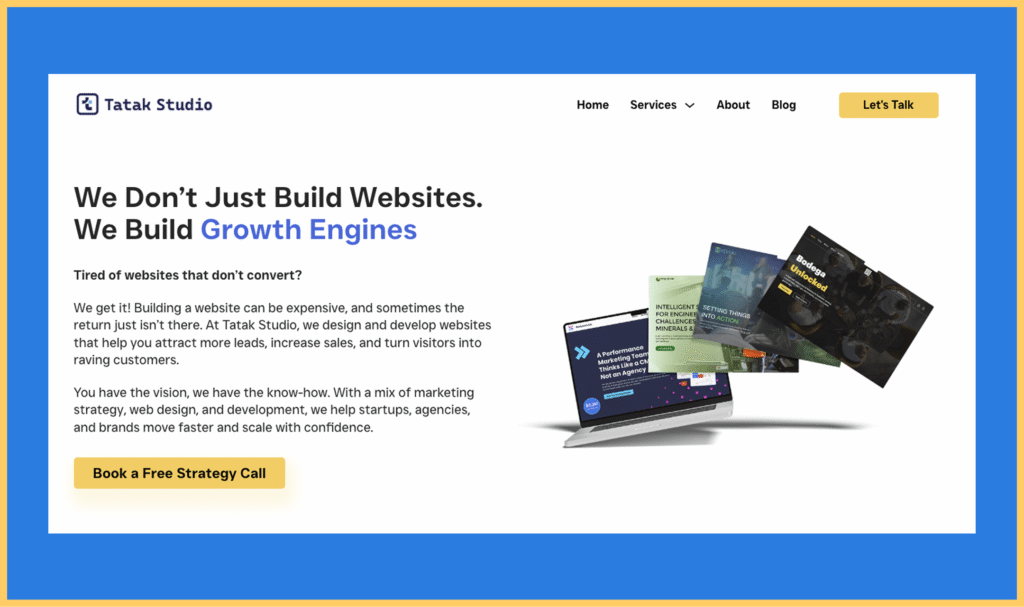
A funnel does one thing: it takes a user who just landed on your site and walks them toward becoming a lead or a customer. It basically answers one question: where do I want this user to go next?
The journey of a basic funnel typically looks like this. Someone finds your site through Google, a social post, or a referral. In five seconds, they land on your homepage, read what you do, who it’s for, and decide whether you’re worth the time or not.
If you are, they get curious, scroll deeper, read about your services, and come across a case study or testimonial that builds trust. Then they hit a clear, specific call-to-action: “Book a free consultation.” They click. They fill out a short form. You get a notification. That’s a lead.
Simple. Intentional. Profitable.
The problem is that most websites skip several of those steps. There’s no clear call-to-action. There’s no lead capture system beyond a generic “Contact Us” form buried in the navigation. There’s no logical flow from one page to the next. Visitors wander in, look around, and leave, and you never know they were there.
The fix starts with asking one question about every page on your site: what is the single job of this page, and am I making it easy for a visitor to complete that job?
Reach: Be Found Before Your Competitor (SEO)
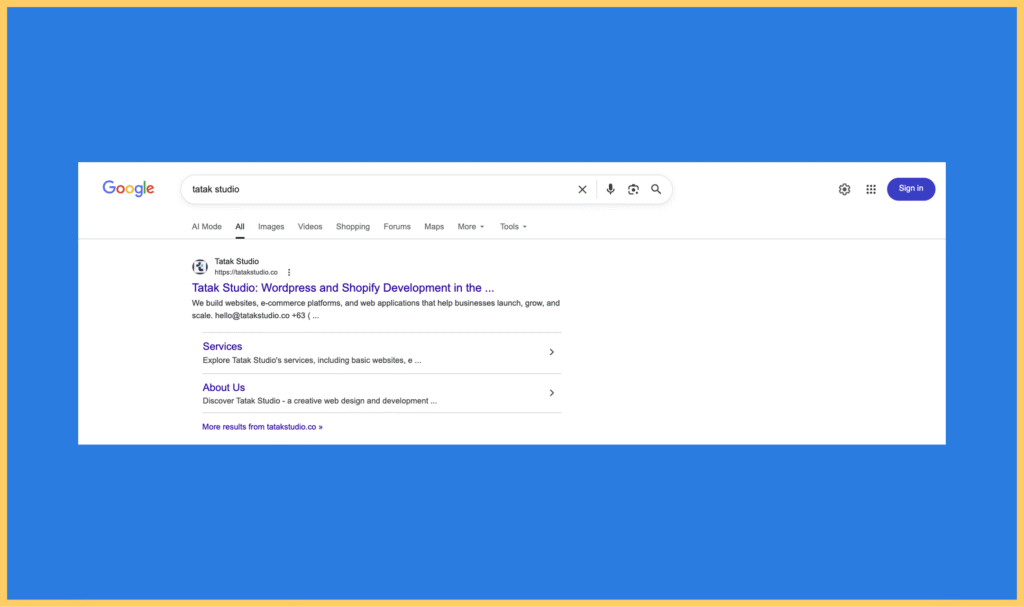
A strategically-designed, beautifully-built website is nothing if nobody can find it.
SEO is how we make it easy for people to find us online. It recommends your site to users actively searching for what you offer. It’s no trick nor hack. It’s the long game. And it’s one of the highest-ROI investments a business can make in its online presence.
There are three things Google fundamentally cares about.
- Relevance: does your content match what people are actually searching for?
- Authority: do other reputable websites link to and reference your content?
- Experience: is your site fast, mobile-friendly, technically sound, and easy to navigate?
The compound effect of good SEO is unlike almost any other marketing channel. Paid ads stop delivering the moment you stop paying. A well-optimized page, on the other hand, can sit on the first page of Google for years and send you free, qualified traffic every single day without an ongoing cost per click.
If you want to start somewhere practical, here’s where to focus:
- Make sure every page on your site has a descriptive title and a meta description that speaks to what the page is about.
- Create content specifically around the questions and phrases your ideal customers type into Google.
- Get your site listed and optimized on Google Business Profile (GBP) if you serve a local or regional market.
- Run your site through a free speed test. A page that takes more than three seconds to load loses more than half its visitors before they even see your content.
SEO takes time. Results typically show between three (3) and six (6) months after you start. This means the best time to have started was six months ago and the second-best time? Now.
Attract: Speak to the Right Person at the Right Moment (Content)
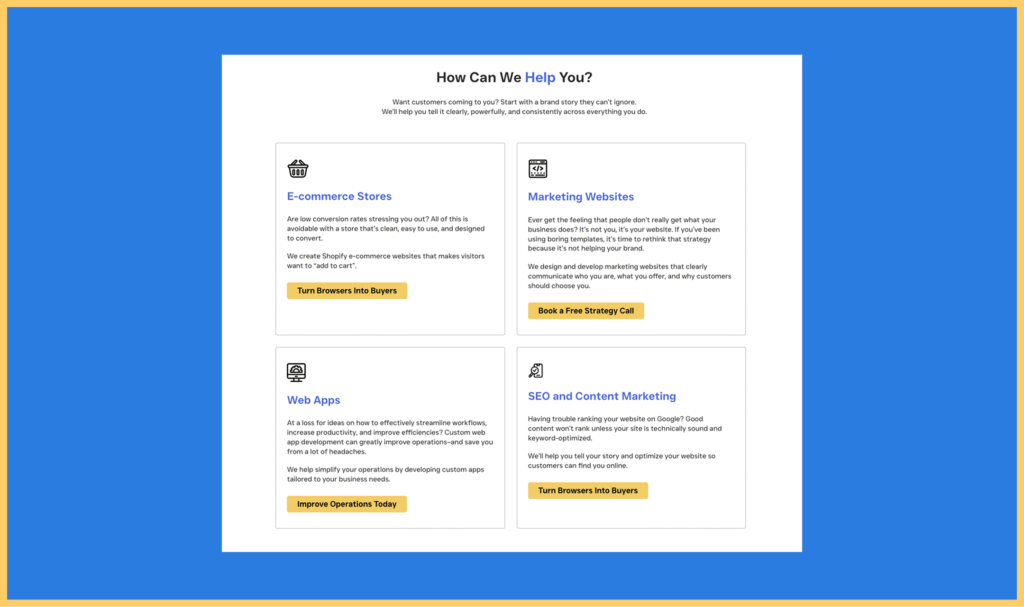
Content is one of the most misunderstood parts of running a website. Most business owners either ignore it entirely or treat it like a checkbox wherein they publish a few blog posts a year and forget about it.
Strategic content is different. It’s not about posting for the sake of posting. It’s about putting the right message in front of the right person at the exact moment they need to hear it.
Your website content serves three distinct jobs. First, it attracts. Second, it educates. And third, it converts.
First, your website pulls in strangers through search engines, social shares, and referrals. Next, it answers real questions your ideal clients are asking before they ever reach out to you. Lastly, it moves a curious reader closer to a decision with every scroll.
The most powerful assets on any business website are not generic blog posts. They’re specific, trust-building pieces that do real work: in-depth case studies that show a transformation from problem to result, FAQ pages that dismantle objections before a sales call, landing pages written for a specific audience with a specific need, and testimonials from real people.
Here’s a simple test for your current website content. Can a first-time visitor immediately tell what you offer and who it’s for? Can they see proof that you’ve done this successfully before? Do they understand what happens after they reach out? If the answer to any of these is no, your content is leaving money on the table.
One great case study that walks a potential client through a real problem you solved with real results will do more for your conversion rate than twenty generic blog posts combined.
Follow-ups: Follow Up Without Lifting a Finger (CRM and Automation)
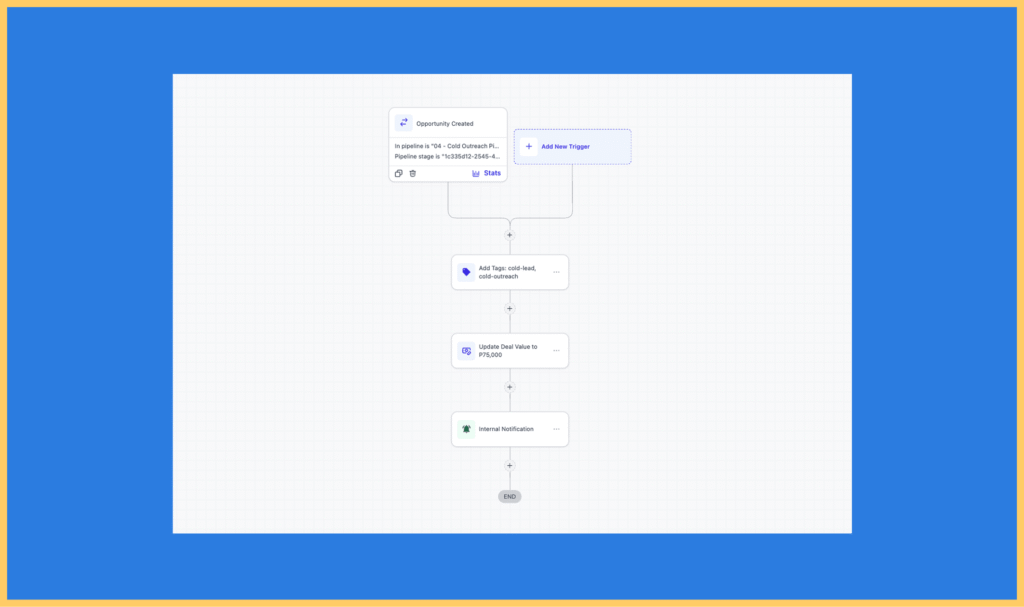
This is where most business fails. Not because they aren’t getting leads. But because they aren’t following up with them properly.
It’s common knowledge that 80% of sales require five or more follow-up touches. Most businesses follow up once, and then forget about it. A lead that doesn’t hear back from you within a few minutes of filling out a form is already cooling down. By the time you get back to them hours later, there’s a good chance they’ve already moved on to a competitor.
CRM stands for customer relationship management. It’s a system that tracks every lead from the moment they first contact you all the way through to a closed deal. When it’s connected to your website and strengthened by automation, it gives your lead a world-class experience and gives you a follow-up system that does not depend solely on your memory and bandwidth but something that runs on its own.
Here’s what a connected system looks like in practice. A visitor fills out a form on your site. Within seconds, they receive a personalized email confirming you received their inquiry. Your CRM automatically creates a new lead record and adds them to your pipeline. Your team gets a notification. And over the next week or two, a sequence of helpful, relevant emails goes out automatically. These are emails designed to build trust, answer common questions, and gently nudge them toward a conversation with you.
You don’t need enterprise-level software to make this work. A basic setup using accessible tools like HubSpot’s free tier or a platform like GoHighLevel, connected to a form on your website, is enough to capture, track, and nurture your leads without manual effort. The goal isn’t complexity. The goal is to make sure no lead ever falls through the cracks again.
Track: Measure What Matters, Drop What Doesn’t (Data and Optimization)
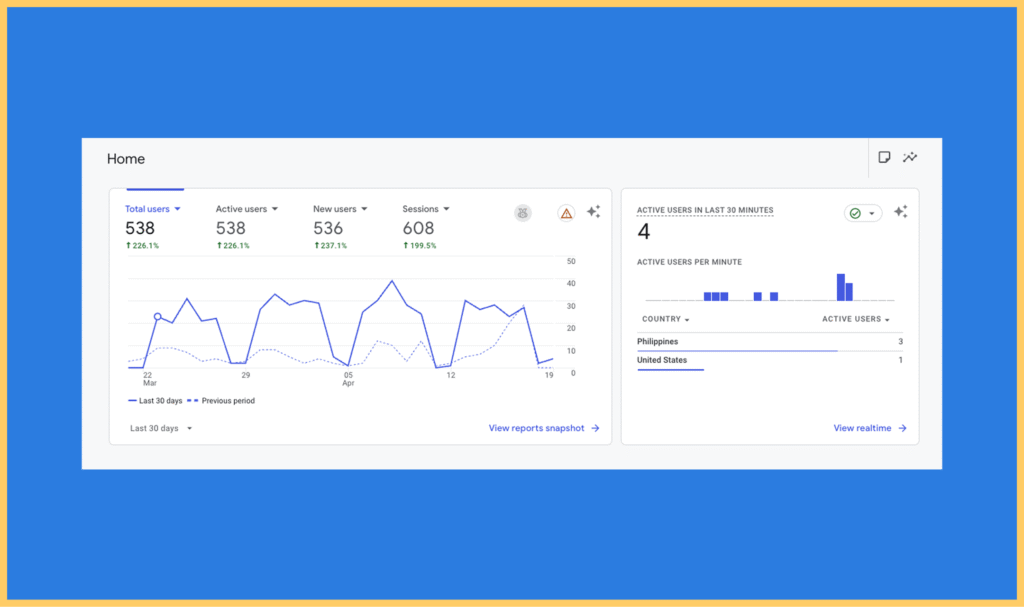
The businesses that win online long-term are not necessarily the ones with the biggest budgets or the most aggressive marketing. They’re the ones who pay attention, learn from what the data tells them, and keep improving.
Most business owners either don’t have analytics set up on their website, or they have it set up and never look at it. Both situations mean you’re making decisions in the dark.
You don’t need to be a data analyst to analyze data flowing in from your website. At its basic, you just need to know a few figures:
- How many people visit your site each month and is that number growing?
- Where are those visits coming from? Organic search, social media, referrals, or paid ads?
- How long are they staying, and which pages are holding their attention?
- What’s your conversion rate (the percentage of visitors who take a desired action)?
- How many of those leads turn into paying clients?
When you track consistently, patterns emerge. These can be starting to notice blog posts that drive 2x or even 3x more inquiries than other content, or discovering that leads coming in through a specific campaign close better than leads coming from another source.
Insights coming from the data provide countless opportunities to improve. And these compound over time into better performance without you spending more on ads.
Subscribe To Our Free Email Course on Marketing
A website that generates consistent revenue isn’t an accident. It’s the result of multiple systems working together: (1) funnels that guide visitors, (2) content that builds trust, (3) SEO that drives qualified traffic, (4) automation that makes follows up easy, and (5) reading data and implementing what it tells you to do next.
Remove any and you’re likely leaving money on the table. Build all five and your website becomes the hardest-working member of your team. One that never calls in sick, never asks for a raise, and one that never sleeps.
Would you like to get more in-depth reading on how you can maximize your website to generate and get more leads week-to-week?
We dive more into:
- Setting up effective funnels for your website
- How content + SEO can help you get more clients online
- How automations will make it easier for you to move contacts from leads to paying customers, and
- How to read data and implement what needs to be done
Get Our Free Email Course
Want an experienced team to step in and build or revamp your website so it actually brings clients in?
The fastest and easiest way to turn it into a lead-generating website is to hire Tatak Studio.
We’ll look at your website, tell you what’s working, what isn’t, and what we’d do about it. We’ll map out the right approach for your business, build the assets, connect the tools, and continuously review the data to implement solutions that improve conversions.
Rather than guessing what to fix next, you’ll have a sales system designed to bring in opportunities, follow up effectively, and get better over time.